
View from the Handlebars: Let’s push iron for an LCWIP that’s fit for purpose
As the August 8 consultation deadline for Hull’s Local Cycling and Walking Strategy (LCWIP) approaches, CycHull’s Martyn E explains why the draft proposals fall short and outlines what’s really needed to transform Hull’s active travel infrastructure.
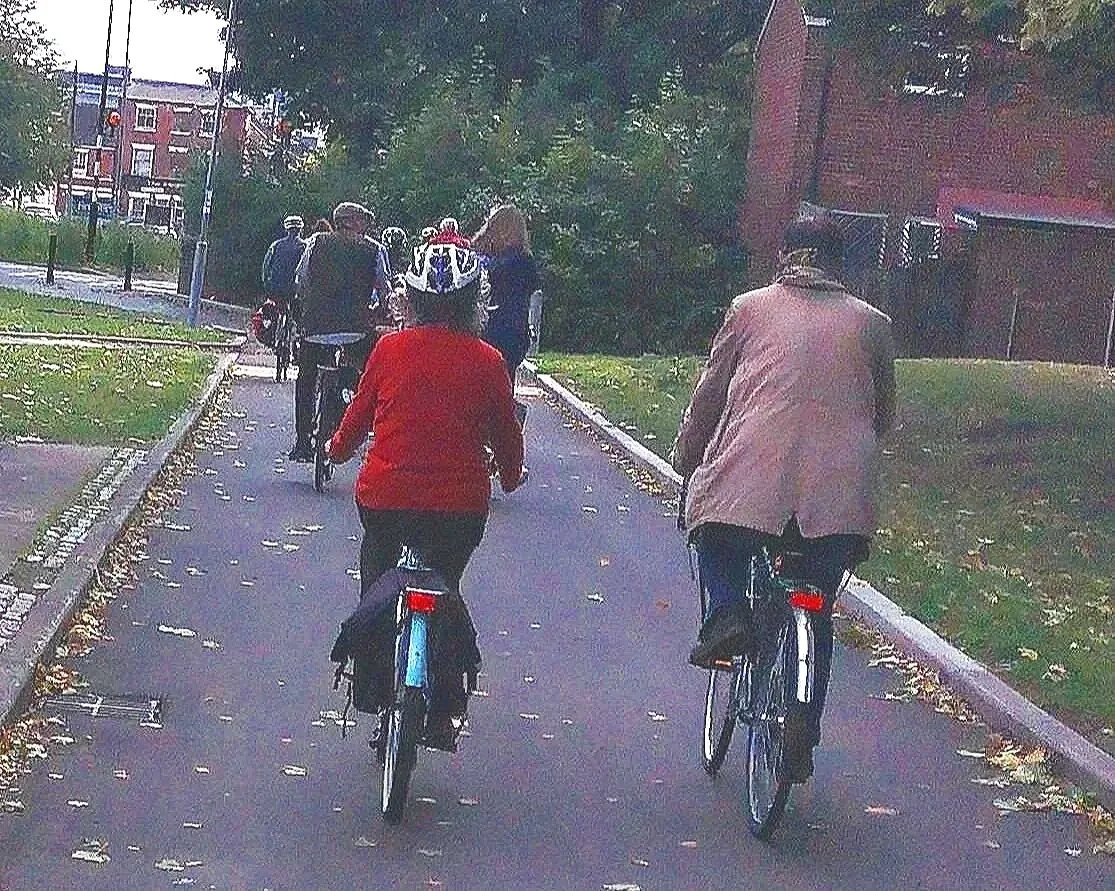
The more the merrier … but Hull’s LCWIP needs to place a greater emphasis on modal shift and non-commuter routes, if it is to be truly transformative
Hull City Council’s Draft Local Cycling and Walking Infrastructure Plan (LCWIP) falls short of its potential to transform the city’s cycling landscape.
The LCWIP is a critical document for securing Active Travel funding over the next decade. But, in its draft form, it prioritises commuting routes, despite only 29% of cycle trips being work-related according to the 2023 National Travel Survey. As far as CycHull is concerned, that focus is too narrow. On top of that, we think the selection criteria for deciding which routes to prioritise is flawed. There is too much emphasis on maintaining the status quo, and not enough on modal shift. This risks delivering a fragmented network that fails to serve Hull’s diverse cycle users. Our proposed amendments aim to create a more inclusive, ambitious, and effective cycling infrastructure that meets the needs of all.
Not Just Commuting
The LCWIP relies on commuting data from the 2021 Census. This has skewed the proposed network toward work-related journeys, sidelining the 40% of trips made for leisure, and 28% for education, shopping, and personal errands. This oversight means that the needs of many families, children, students, and casual cyclists are all under-represented - despite the fact that these groups are critical to increasing cycling uptake and fostering a cultural shift toward active travel.
By excluding school travel data and leisure destinations like parks or the countryside, the plan misses opportunities to create a network that appeals to a much wider population. These routes would encourage cycling among young people and families, enhancing inclusivity and supporting Hull’s Carbon Neutral Strategy. A network designed solely around commuters risks alienating these groups, limiting its impact and failing to promote cycling as a viable option for everyday life.
Better Selection Criteria
The LCWIP’s selection framework further undermines its vision. In order to determine which routes to prioritise, it gives equal weight to eight factors - ranging from modal shift potential to funding availability. However, this has produced some unambitious outcomes for cycling. Notably, no route achieves a ‘significant’ modal shift score, reflecting a lack of bold vision. Safety, a paramount concern, is also undervalued, with only one route scoring highly despite high collision rates on several corridors.
The environmental impact criterion penalises off-road schemes for potential green space loss, discouraging safer, more attractive routes like those along Holderness Drain. Additionally, the perceived ability to attract funding overshadows public benefit, while the framework ignores network connectivity, failing to assess how routes integrate into a cohesive system.
CycHull proposes a revised scoring system to address these flaws. Our framework prioritises modal shift and safety. This, we believe, will create high-impact schemes that encourage widespread cycling adoption. We have also introduced three new criteria—equity, network connectivity, and attractiveness— to better serve low-income communities, children, and elderly cyclists, ensure route integration, and prioritise scenic, enjoyable paths. We have adjusted environmental impact scoring is adjusted to focus on overall benefits, such as reduced emissions, rather than penalising off-road routes. Finally, we have removed ‘funding potential’ as a criterion to avoid favouring commercial schemes over public good, and to support transformative projects that deliver long-term value.
A Network for All
CycHull’s amendments aim to create a network that serves all cyclists, not just commuters. By incorporating leisure routes like Holderness Drain and child-friendly infrastructure, such as School Streets, the revised framework aligns with Hull’s Carbon Neutral Strategy and City Centre Vision. It delivers safer, more connected routes that cater to diverse users, fostering equity, boosting tourism, and promoting healthier lifestyles.
We strongly advise Hull City Council to adopt the inclusive CycHull approach, positioning Hull as a cycle-friendly city, with vibrant paths linking schools, parks, and the countryside.
—
Join CycHull in urging Hull City Council to adopt these changes. Submit your feedback by 8th August to shape a safer, greener, and healthier Hull.
You can read the full version of Martyn’s report on Hull’s draft LCWIP here.